The first time I tried to explain eco-friendly home design to a friend, I made a mess of it. I started with solar panels. Then I jumped to insulation. Then I mentioned a heat pump, and his eyes glazed over. Half an hour later he asked the only question that mattered to him: "Okay, but what does it actually cost me?"
That question is where most conversations about sustainable architecture should start. Not with photovoltaic cells or bamboo flooring, but with the boring, decisive stuff: orientation, airtightness, and the order in which you spend money. Get those right and a modest house can outperform a gadget-stuffed one that costs twice as much.
I learned this the hard way on my own renovation. I'll get to the mistakes later, including the €4,000 I burned on a technology I didn't need.
Key Takeaways
- Sustainable design is a sequence, not a shopping list: reduce demand first, then supply what's left.
- Orientation, insulation and airtightness usually deliver more per euro than any single piece of equipment.
- Certifications matter less than measured performance. A cheap airtightness test tells you more than a glossy label.
- You can start small. Some of the highest-return moves cost less than a mid-range appliance.
- Regulations and subsidy schemes vary enormously by country and shift often—check your local rules before committing.
- A house that's uncomfortable to live in is not sustainable, no matter what its energy figures say.
What sustainable architecture actually means (and what it doesn't)
Strip away the marketing and sustainable architecture comes down to one idea: meeting your comfort needs with the smallest possible draw on energy, materials and land. That's it. Everything else—the certifications, the exotic materials, the smart thermostats—is a means to that end, not the end itself.
Here's the thing most guides skip. A building's environmental impact is locked in long before anyone moves in. The frame, the foundation, the insulation, the glazing: those decisions set the trajectory for the next fifty years. A heat pump swapped in later is a small correction. A house pointed the wrong way is a permanent one.
The three questions that organize every project
Whenever I look at a plan, I run it through the same filter:
- Can I shrink the demand? Orientation, compact shape, decent glazing ratios.
- Can I meet the rest passively? Thermal mass, cross-ventilation, shading.
- What's left, and what's the cheapest clean way to cover it? Only now do renewables enter the conversation.
Reverse that order and you get the classic mistake: an oversized heating system bolted onto a leaky shell, running flat out to compensate for bad design. I've seen it dozens of times. It never ends well.
Eco-friendly house materials: what to pick and what to skip
Material choice generates more debate—and more nonsense—than any other topic in this field. So let me be blunt about how I think about it.

The question isn't "is this material green?" It's "green compared to what, over how long, and made where?" A material trucked across a continent can lose much of its advantage. A "natural" product with a short lifespan can be worse than a synthetic one that lasts fifty years.
Materials that usually earn their place
- Cellulose insulation made from recycled paper—cheap, effective, low embodied carbon.
- Locally sourced timber for structure, where your building code allows it and your climate tolerates it.
- Lime-based plasters and renders, which breathe and handle moisture gracefully.
- Reclaimed brick and stone, if you can find a nearby salvage yard. The embodied carbon is essentially already paid for.
- Clay or rammed earth in dry climates with the right labour available—beautiful thermal mass, but demanding to execute.
Materials to question
Rigid foam boards with high-global-warming blowing agents. Anything shipped in from far away purely for its eco-label. And "breathable" membranes that nobody on site knows how to install correctly—a category I have personally suffered through.
The honest rule: the best material is the one that performs well in your climate and that your builder actually knows how to handle. Theoretical performance means nothing if it's installed badly.
| Approach | Typical upfront cost | Main benefit | Main risk |
|---|---|---|---|
| Improve airtightness + insulation | Low to moderate | Immediate comfort and energy savings | Poor detailing can trap moisture |
| Passive solar orientation | Near zero at design stage | Free heating and cooling | Impossible to change later |
| Heat pump | Moderate to high | Efficient heating in mild climates | Pointless in a leaky house |
| Solar panels | Moderate, falling | On-site electricity | Roof orientation may limit output |
| Rainwater harvesting | Low to moderate | Reduced water draw | Local rules vary widely |
How to make an eco-friendly house on a real budget
Money is where sustainable design either works or collapses. So let's talk about it in the order you'll actually spend it.
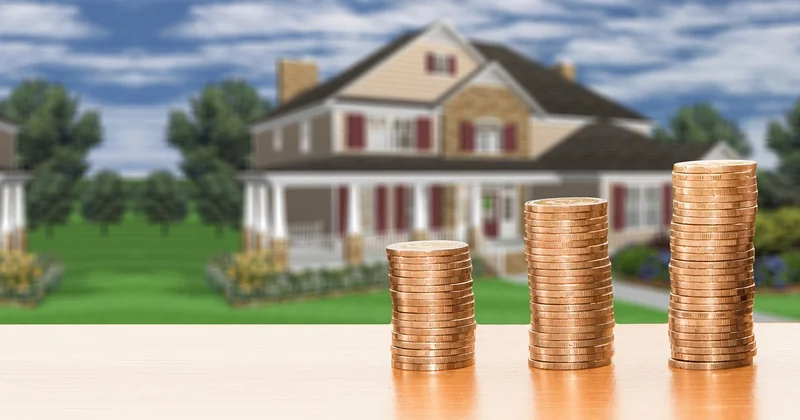
My strongest advice: spend your first euros on the envelope, not the equipment. Every euro that reduces heat loss makes every euro you spend later on heating go further. That logic holds whether you're building new or renovating an old place.
Moves under €500
- Draught-proofing doors and windows. Unglamorous, immediate, effective.
- Add thermal curtains on the coldest-facing glazing.
- Fit low-flow shower heads and tap aerators.
- Install a couple of smart thermostatic radiator valves.
Moves under €5,000
Loft or roof insulation. Cavity wall insulation where your wall type allows it. External shading on the worst summer-facing windows. A proper airtightness test to find where you're leaking—I paid for one on my renovation and it found a gap behind a kitchen cabinet that had been quietly costing me money for two winters.
Moves for a larger budget
Full external wall insulation. Window replacement with well-specified glazing. A heat pump or biomass system, once the demand side is handled. And only then, solar. In that order.
Three things I got wrong, so you don't have to
I promised honesty, so here it is.

One. I bought a solar thermal system before fixing the insulation. It worked fine—for the two square metres of hot water I needed in summer, and not nearly enough in winter. The money would have done far more good in the loft. I'd estimate the misplaced spend at around €4,000.
Two. I assumed a certified green material would be installed correctly because it was certified. It wasn't. A breathable render applied over an impermeable base coat is just an expensive way to trap damp. I had to strip it back and start again.
Three. I treated ventilation as an afterthought. In a tight, well-insulated house, ventilation isn't optional—it's what stops your careful airtightness from turning into a mould problem. This is the single most common mistake I see, and it's the one that costs the most to fix after the fact.
Small houses, low budgets, and why constraints help
Small eco-friendly house design is, in my view, where this whole field gets most interesting. Tiny homes, compact infill units, converted outbuildings. The constraints force better decisions.
A smaller footprint means less material, less to heat, less to maintain. It also means your passive design has to be sharper, because there's no slack to hide behind an oversized system. I've seen a well-oriented compact house in a mild climate run comfortably with almost no active heating. I've also seen a sprawling "eco" build burn through more power than a conventional one, because nobody checked the orientation until it was too late.
Spoiler: size buys you more sustainability than any technology does.
Regulations, labels and financial support
Here's a section most guides get wrong, usually by pretending the rules are simple. They aren't—and they change.
Building energy regulations, subsidy schemes and tax credits differ wildly between countries, and often between regions within the same country. What qualifies for support this year may not next year. So rather than quote figures that will be wrong by the time you read them, here's what actually matters:
- Check your local building energy rules before you design anything. Retrofitting compliance is expensive; designing for it is cheap.
- Look for airtightness and energy performance testing rather than label names. Measured performance beats branding.
- Ask your municipality about current support schemes directly. This is the one place where a five-minute phone call beats a week of reading.
Certifications can be useful as a quality signal when you're buying a house you didn't build. They're much less useful as a design goal.
The house that lasts is the house that works
After all the materials, the calculations and the hard-won lessons, I keep coming back to something simple. A sustainable home is one you actually want to live in for decades. If it's cold in winter, stuffy in summer, or so fiddly that you stop using its systems, it fails—regardless of what its energy certificate says.
The most sustainable building I know of is the one nobody tears down. So design for comfort, spend your money in the right order, and don't let anyone sell you a technology before you've fixed the shell around it.