Walk into a $4.2 million listing in Scottsdale and the first thing the agent hands you isn't a glass of champagne. It's an iPad. One tap dims the wine room, another opens the twelve-foot sliding wall to the terrace, a third sets the pool to 88 degrees before you've even taken off your jacket. I've watched buyers who swore they didn't care about home tech spend the next forty minutes playing with that tablet — and then ask, quietly, whether the system stays with the house.
That question is the whole ballgame now. Smart home technology has stopped being a checkbox on a luxury listing sheet and started being part of how wealthy buyers judge whether a property feels finished. The appeal is real, and it's measurable in how long homes sit on the market, in what buyers negotiate over, and in which upgrades actually return money at resale versus which ones just impress guests for a weekend.
But here's what most write-ups skip: the appeal comes with a bill, a headache, and a whole category of risk that nobody puts in the brochure. Below I'll walk through why smart homes sell in the luxury tier, what actually goes wrong, and how to think about the recurring costs and ecosystem choices you'll face in 2026.
Key takeaways
- In luxury real estate, integrated smart systems function as a finish, like millwork or stone — buyers notice their absence more than their presence.
- The biggest drawbacks are obsolescence, vendor lock-in, cybersecurity exposure, and maintenance complexity — not the technology itself.
- Monthly fees are real and stack up: monitoring, cloud storage, cellular backup, and platform subscriptions can run into the low hundreds per month.
- In 2026, the honest answer about the "best ecosystem" is that Matter changed the rules, and the winner depends on whether you prioritize flexibility or a single integrator.
- Retrofitting an older estate costs dramatically more than wiring new construction — plan for it early or pay for it later.
Why smart homes drive value in luxury real estate
Luxury buyers aren't shopping for gadgets. They're shopping for a feeling: the sense that a property anticipates them. A home that knows to warm the primary suite before an early flight, that locks itself when the last person leaves, that dims the gallery lighting to protect a canvas from UV — that home reads as considered. And in the luxury tier, "considered" is the entire product.
The reason smart technology has such outsized appeal here comes down to how wealthy buyers actually evaluate a property. They're rarely buying their first home. They've owned enough houses to know that the friction of daily life — forgetting to arm the alarm, hunting for a thermostat, coordinating a staff of four — is what erodes the pleasure of a beautiful home. Automation removes friction. That's the appeal, stripped of marketing language.
The differentiator that buyers now expect
A decade ago, a smart system was a conversation starter at a showing. Now it's closer to a baseline. Buyers touring homes above a certain price point increasingly assume that lighting, climate, security, and audio are coordinated — and when they aren't, the property feels dated in a way that's hard to fix cheaply.
I've seen this play out in negotiations. Two homes, similar square footage, similar finishes. The one with a coherent, professionally integrated system holds its price; the one with a patchwork of consumer devices — a Ring doorbell here, a Nest thermostat there, three different apps — invites lowball offers because buyers mentally subtract the cost of ripping it all out and starting over.
What actually moves the needle
Not every smart feature carries equal weight. Based on what I've watched buyers respond to at showings, the hierarchy is fairly consistent:
- Lighting and shading control — the most visible, most appreciated, and the feature guests notice immediately.
- Security and access — cameras, smart locks, and remote monitoring, which matter most to buyers who travel frequently or own multiple properties.
- Climate zoning — less glamorous, but a genuine comfort win in large homes where a single thermostat can't manage the load.
- Distributed audio and video — expected in entertainment areas, invisible everywhere else.
- Energy management — quietly rising in importance, especially where utility costs and grid reliability are concerns.
The features that don't move the needle are the novelty ones: the smart mirror, the voice-activated faucet, the refrigerator that texts you. Buyers see them, smile, and forget them. They add cost without adding perceived value, and they're the first things to break.
The core insight is simple: in this tier, smart technology sells when it's invisible and reliable, and it hurts when it's flashy and fragile. What are the downsides of having a smart home? That's the next question, and it deserves a straight answer.
The downsides nobody puts in the brochure
Obsolescence is the quiet killer. A system installed in 2019 may still function perfectly in 2026, but if its manufacturer has stopped issuing firmware updates or its app no longer runs on the current mobile OS, you're left with expensive hardware that's slowly becoming a paperweight. In a luxury home, this is worse than in an apartment, because the integration is deeper — the shades, the HVAC, the pool, the gates all run through the same brain.
When that brain gets abandoned, replacing it isn't like swapping a light bulb. It's surgery.
Here's a scenario I've seen more than once: a homeowner buys a property with a fully integrated system built around a platform the original owner loved. Three years later, the integrator who installed it has moved on, the platform has changed its licensing model, and the new owner can't get anyone to service the existing setup without essentially rebuilding it. The cost of that rebuild lands squarely on the seller's side of the negotiation table.
Vendor lock-in is the real trap
Proprietary ecosystems are seductive because they work beautifully — until you want to leave. Once your lighting, security, and climate all speak a single manufacturer's private language, you're tethered to that manufacturer's pricing, service schedule, and product roadmap. If they decide to discontinue a line or raise subscription fees, you have limited leverage.
This is the single most under-discussed drawback in luxury smart homes, and it's exactly why the industry's shift toward open standards matters so much.
Cybersecurity and maintenance complexity
A connected home is a networked home, and a networked home is attackable. For a luxury property, the stakes are higher: security cameras, gate controls, and occupancy data are sensitive. A system with weak passwords, outdated firmware, or a poorly secured network is a genuine liability, not a hypothetical one.
Maintenance adds another layer. Someone has to update the software, replace failed sensors, manage the network, and troubleshoot the inevitable conflicts when one device's update breaks another's automation. In a large estate, that's either a paid service relationship or a recurring headache for the owner.
None of this means smart homes are a bad idea. It means the appeal has a dark side, and pretending otherwise is how buyers end up disappointed. The question is whether those drawbacks outweigh the benefits — which brings us to the honest ledger.
Benefits and drawbacks of a smart house
The fairest way to judge a smart home is to weigh what you gain against what you take on. The benefits are concrete: convenience, security, energy efficiency, and — in the luxury tier — a measurable edge at resale. The drawbacks are equally concrete: cost, complexity, dependency, and the risk that today's system is tomorrow's orphan.
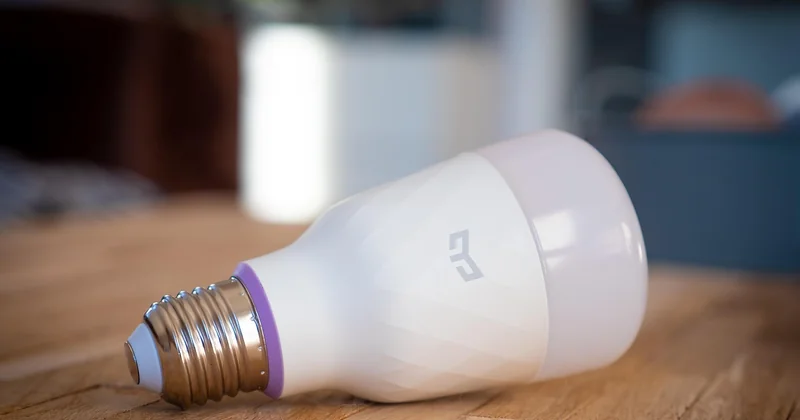
What makes the calculation tricky is that the benefits show up immediately while the drawbacks arrive slowly. You enjoy the convenience every day; you feel the pain of obsolescence years later. That asymmetry is why so many owners underestimate the long-term burden.
| Factor | Benefit | Drawback |
|---|---|---|
| Convenience | Coordinated control of lighting, climate, security, audio | Dependency on apps and networks that can fail |
| Security | Remote monitoring, smart locks, cameras, alerts | New attack surface requiring active management |
| Energy | Smarter zoning and scheduling can trim consumption | Upfront hardware and integration costs |
| Resale | A coherent system supports asking price | A dated or fragmented system depresses it |
| Lifestyle | Friction removed from daily routines | Maintenance, updates, and subscription fatigue |
My read: for a luxury property, the benefits clearly win — if the system is built on open standards and serviced by someone competent. If it's a pile of mismatched consumer gadgets glued together, the drawbacks win, and you'll pay for the privilege.
So how do you avoid the trap? You start by choosing the right ecosystem, which in 2026 looks very different than it did a few years ago.
What will be the best smart home ecosystem in 2026?
The honest answer is that there's no single winner — it depends on what you value. But the landscape shifted meaningfully thanks to Matter, the interoperability standard that lets devices from different manufacturers work together. That change reduced the penalty for picking the "wrong" brand, which was the biggest fear for luxury buyers.

With Matter as a foundation, the practical question becomes: do you want maximum flexibility, or a single trusted integrator who handles everything? Those two paths lead to different ecosystems.
The main contenders
- Apple Home — strongest for privacy-conscious owners and households already inside the Apple ecosystem.
- Google Home — excellent voice control and broad device support, with the smoothest consumer experience.
- Amazon Alexa — the widest device compatibility and the most aggressive pricing on hardware.
- Control4, Crestron, Savant — professional-grade systems built for large estates, with dealers who handle design, installation, and service.
For a sprawling luxury property with dozens of zones, a professionally installed system from the latter group still tends to deliver the most reliable experience — at a price. For a smaller home or an owner who wants to tinker, a Matter-compatible setup built around Apple, Google, or Alexa gives you flexibility without locking you to one vendor.
The trend I'd bet on: professional systems adopting Matter so they can talk to consumer devices, and consumer platforms getting good enough to handle more of a mid-size home. The gap is narrowing, but for true luxury scale, the integrator still earns their fee.
Is there a monthly fee for smart homes?
Yes, and it's one of the least-discussed costs. Very few smart homes run for free. The recurring charges typically fall into a few buckets:
- Professional monitoring — for security systems, often billed monthly or annually.
- Cloud storage — camera footage and backup services usually come with a subscription tier.
- Cellular or network backup — so your system keeps working when the internet goes down.
- Platform or software subscriptions — some professional systems charge for access to their app, updates, or advanced features.
- Integrator service agreements — many luxury installations include an ongoing maintenance contract.
Stack a few of these together and you're looking at a recurring bill that can reach into the low hundreds per month for a fully featured estate. That's not a dealbreaker at the luxury tier, but it's a cost that should be disclosed and budgeted, not discovered after closing.
Worth noting: some of the consumer platforms have moved toward offering their core functions without a mandatory fee, reserving subscriptions for premium features. That's a meaningful difference from the professional systems, where service agreements are often the norm. Which model suits you depends on how much hands-on management you're willing to do.
How to buy a smart home without regrets
If you're evaluating a property — or planning to sell one — the smart system deserves the same scrutiny as the roof and the foundation. Here's what I'd check:
- Ask who installed it and whether they're still available. An orphaned system is a liability.
- Identify the platform and whether it's still supported. Check for firmware updates and app compatibility.
- Request the documentation. A well-built system comes with diagrams, credentials, and a clear service history.
- Confirm what's subscription-based. Get the recurring costs in writing before you commit.
- Test the automations, not just the devices. Do the scenes actually trigger the way they should?
- Look for open standards. Matter compatibility is a signal that the system won't strand you.
- Budget for the retrofit. If the system is dated, price the replacement before you negotiate.
The mistake I see buyers make most often is falling in love with the demo and skipping the due diligence. The tablet is impressive. The question that matters is what happens when the tablet stops working and nobody knows how the system was wired.
Get that answered, and the appeal of a smart home in luxury real estate becomes what it should be: a genuine enhancement to how you live, not a hidden obligation you inherit.
The best smart home is the one you barely notice — until you walk into a house that lacks it, and suddenly feel the friction you'd forgotten was there. That's the real argument for the technology, and it's why the market keeps rewarding properties that get it right.