Two identical four-bedroom houses sit on the same street. One sold last spring for $1.4 million. The other is still waiting, eighteen months later, with $200,000 already shaved off the asking price. The kitchens are the same size. The lots are the same size. So what separates them?
I've walked through dozens of "luxury" listings over the past few years, both as a buyer and as someone who writes about residential real estate. And I'll tell you something uncomfortable: most of what gets marketed as luxury amenities is decoration. A wine fridge doesn't make a house luxury. A smart thermostat certainly doesn't. What makes a property truly luxury is a narrower, more measurable set of qualities—and once you see them, you can't unsee them in every listing you open afterward.
This isn't about taste or price tags. It's about the criteria that actually separate a genuinely exceptional property from an expensive one. Let's break down what those amenities really are, how to spot them, and why some features quietly add six figures to a valuation while others add almost nothing.
Key Takeaways
- True luxury amenities are rare, verifiable, and difficult to replicate—not simply expensive to install.
- Location, privacy, craftsmanship, and service quality carry more weight than any single appliance or gadget.
- The "3-3-3 rule" is a rough appraisal heuristic, not a formal regulation—useful for framing, not for pricing.
- Five attributes drive real estate value: utility, scarcity, desirability, transferability, and effective demand.
- A home qualifies as luxury when its price sits well above the local market's top percentile and it delivers amenities that can't be mass-produced.
- The fastest way to lose value? Over-customizing for one specific buyer's taste.
What actually makes a property truly luxury: the amenities that hold value
Here's the pattern I keep running into. A seller lists a home at $2.8 million and leads with a "chef's kitchen" and "spa-inspired bathroom." Meanwhile the home next door, listed at the same price, leads with a private lot that will never be built on, a primary suite with zero shared walls, and a service staff arrangement that's been running smoothly for a decade. Guess which one closes faster.
The first home is selling appliances. The second is selling conditions that can't be copied. That's the whole game. Let me show you what that looks like in practice.
What are considered luxury amenities?
Luxury amenities are features that are genuinely rare in your specific market, cost significantly more to install or maintain than standard equivalents, and require ongoing service or expertise to function properly. That's the working definition I use, and it's stricter than most people expect.
By that standard, a home theater qualifies. A jetted tub in a standard bathroom usually doesn't—those are common enough now that they've become baseline, not premium.
The amenities that consistently hold their value fall into a few clusters:
- Privacy infrastructure: gated entry, mature landscaping screens, soundproofing between zones, no line-of-sight from neighboring structures.
- Wellness and recreation: lap pools, resistance pools, a proper sauna or hammam, home gyms with real ventilation, padel or tennis courts on-site.
- Service and staffing: concierge coverage, valet, private security, on-call maintenance with defined response times.
- Custom-crafted features: millwork, stone sourced and matched across rooms, one-off architectural elements.
- Technology that disappears: whole-home automation that a guest never notices because the lights simply do what they should.
- Parking and access: garage capacity that exceeds local norms, private elevators, direct-to-unit entry.
Notice what's on the list and what isn't. The best technology is the kind you don't see. The worst "luxury" is the kind that announces itself with a wall of touchscreens.
What qualifies a home as luxury?
A property qualifies as luxury when its price sits well above the local market's top tier and it delivers amenities that competitors in that same tier can't easily match. Both conditions have to be true. Price alone proves nothing—plenty of overpriced homes exist. Amenities alone prove nothing either, if the location is wrong.
Here's a rough way I think about the threshold: if the property's price lands in roughly the top 5 to 10 percent of its local market, it's competing in the luxury conversation. Below that, it's a very nice home. Above it, you're in a different category entirely, where buyers start asking about staff protocols and off-market availability rather than square footage.
That top-percent threshold shifts dramatically by market. What reads as luxury in one city looks merely comfortable in another, and vice versa. I've watched a buyer cross a zip code line and immediately need $900,000 more for the same house. The location wasn't luck. It was the whole point.
The 3-3-3 rule: what it means and why it's only a starting point
You'll hear the "3-3-3 rule" floated in real estate circles. The honest answer: it's a loose memory aid, not an appraisal standard, and anyone who tells you otherwise is overselling it. But it's a useful frame for beginners, so let's unpack it.
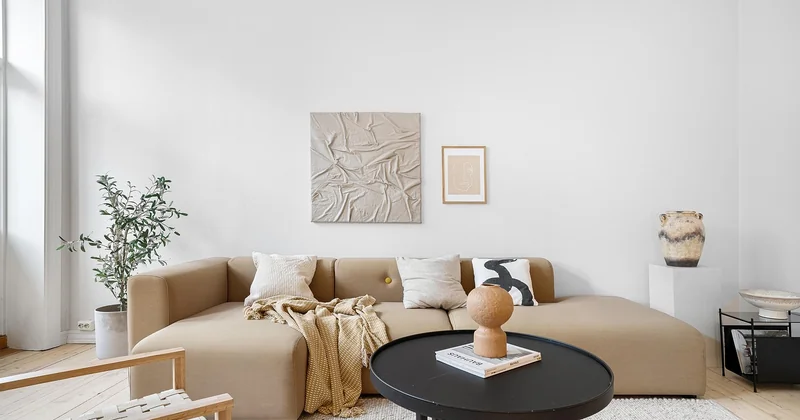
The most common version of the rule holds that a strong property investment should satisfy three conditions across three dimensions—typically something like a three-year holding period, a three percent return threshold, and three separate value drivers. Other versions apply it to financing (three percent down isn't the point here, so ignore that reading). The specific numbers get bent depending on who's speaking.
Why the rule falls short
The problem: those numbers are arbitrary. A three-year hold makes sense in a fast-moving market and no sense in a slow one. A three percent return is laughable for some properties and generous for others. The rule's real value is structural—it forces you to name your holding period, return target, and value drivers before you commit. That discipline is worth keeping. The specific figures, not so much.
Where the 3-3-3 idea becomes genuinely useful is when you apply it to amenities themselves. Ask: does this feature support value across three different buyer types? Will it still matter in three years? Does it hit three of the five value attributes below? If an amenity fails all three tests, it's probably decoration.
What are the 5 attributes of real estate value?
Every serious valuation conversation circles back to five attributes. You'll find them in appraisal training and they hold up remarkably well when you're staring at a listing and trying to figure out whether the asking price is justified.

| Attribute | What it means | Luxury example |
|---|---|---|
| Utility | The property can actually serve its intended use well | A home office with real windows and acoustic separation |
| Scarcity | Supply is genuinely limited | Oceanfront or a protected view corridor |
| Desirability | Buyers want it for reasons beyond function | Architectural pedigree or a storied address |
| Transferability | Value can move to the next owner | Clean title, no restrictive covenants that limit resale |
| Effective demand | There are buyers with both the will and the means | A buyer pool that isn't dependent on one industry |
Here's where this becomes practical. When you evaluate an amenity, run it through these five filters. A home gym scores high on utility and desirability, low on scarcity. A private beach access scores high on scarcity and transferability, but it depends entirely on effective demand—if the buyer pool evaporates, the value evaporates with it.
The amenity that scores across all five? Genuine privacy combined with a location buyers will always want. That combination is nearly impossible to replicate, and it's why the boring-sounding amenity keeps winning.
Why scarcity outweighs almost everything else
You can add a pool. You can renovate a kitchen. You can install a spa. What you can't manufacture is a lot that will never be built on, a view that's legally protected, or a parcel in a neighborhood where construction has stopped. Scarcity is the one attribute no amount of money can retrofit.
This is why penthouses command such premiums. It's not the ceiling height. It's the fact that no one can build above you.
Where most luxury listings get it wrong
I've made this mistake myself. When I first started evaluating properties seriously, I got seduced by feature lists. Marble counters. A wine room. A home theater with reclining seats. I remember walking through one house, adding up the "wow" features, and feeling certain it was a steal at the asking price.
It wasn't. The lot backed onto a future development parcel. Within two years, the protected view was gone, and with it a meaningful chunk of the resale value. The expensive finishes were still there. The thing that actually mattered wasn't.
That's the trap. Luxury features are often durable in the short term and fragile in the long term. A wine fridge lasts a decade. A view can disappear in eighteen months if you haven't checked what's buildable next door.
Two more mistakes I see constantly:
- Over-personalizing. A custom feature built for one specific taste can actively reduce your buyer pool. That hand-painted ceiling in a color you love? It's a negotiation point for the next owner, and not in your favor.
- Confusing size with quality. A larger home isn't automatically a better one. Above a certain square footage, extra rooms often just mean extra maintenance and higher carrying costs.
Both errors come from the same root: treating amenities as decoration rather than as value drivers.
The amenities you should actually prioritize
If you're buying, here's what I'd focus on—in roughly this order.
Location quality that can't be eroded. Check what's zoned for the adjacent parcels before you fall in love. A view today isn't a view forever.
Privacy you can verify. Sit in the primary bedroom at night and count the windows you can see into from yours. Then reverse it. Real privacy is measurable.
Craftsmanship with a paper trail. Ask who built it and what's documented. A renovation with receipts holds value. A beautiful kitchen with no provenance is a question mark.
Service infrastructure. If the property relies on staff or concierge, ask about response times and turnover. A concierge service that can't retain staff is worse than none at all.
Amenities that serve more than one buyer type. A flexible guest suite beats a dedicated media room, because it appeals to more people.
And the thing to deprioritize? Any feature that exists mainly to be photographed. Listings are optimized for photographs. Ownership is optimized for how a space actually feels on a Tuesday morning.
Here's what I keep coming back to. Luxury isn't the sum of expensive parts. It's the alignment of a rare location, verifiable scarcity, real craftsmanship, and amenities that quietly make life better without demanding attention. Everything else is packaging. The market eventually unwraps it—sometimes a lot faster than the seller expects.
Which leaves one question worth sitting with. If you stripped away every feature that could be replicated by a competitor with a bigger budget, what would be left of the property you're looking at?