What actually makes a home feel luxurious (and why it isn't the chandelier)
Walk into a $6 million house and you can usually tell within ninety seconds whether it's genuinely high-end or just expensive. The marble is there. The double staircase is there. And yet something feels off, like a stage set that hasn't been lived in. I've toured dozens of properties in that bracket over the past few years, sometimes as a buyer, sometimes just out of curiosity, and the pattern never fails: the homes that feel luxurious are the ones where someone thought about how you'd use the space, not about how it would photograph.
That distinction matters more in 2026 than it did a decade ago. The luxury market has shifted. Buyers who once wanted cathedral ceilings and imported stone now ask about air quality, acoustic isolation, and whether the primary suite has its own circadian lighting. The chandelier still helps. It just isn't the argument anymore.
Key Takeaways
- Luxury is defined locally: what counts as high-end in one market is mid-tier in another, and price percentile matters more than any single feature.
- The modern luxury buyer weighs wellness infrastructure (air, water, sound, light) as heavily as square footage.
- Architectural pedigree and provenance add resale value that a renovated basement never will.
- Customization is the real dividing line: production homes stop at finishes, true luxury homes start at layout.
- Some features are regional obsessions. A basement wine cellar is standard in one city and unheard of in another.
- Over-improving for your market is the most common and most expensive mistake sellers make.
Features that define high-end homes, ranked by what buyers actually notice
Ask ten agents what defines a high-end home and you'll get ten lists, most of them starting with square footage. That's lazy. Footage is a threshold, not a feature. Below roughly 4,000 square feet you're in the upper-middle market in most metros; past 8,000 you're in a different category entirely, but only if the lot, the location, and the systems scale with it. A 9,000-square-foot house on a quarter acre in a mid-tier suburb reads as a mistake, not a luxury.
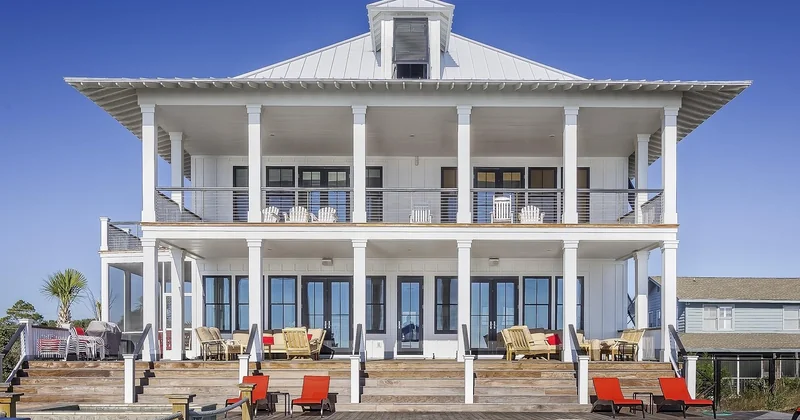
What are some defining features of high-end homes?
The features that recur across genuinely high-end properties fall into four groups, and I'd argue the last group is the one most people underestimate.
- Site and setting. Premium location, protected views, privacy from neighbors, and land that matches the structure. A guest house on two acres beats a home theater on a tenth of an acre.
- Architectural intent. A named architect or a design with a coherent point of view. Ceiling heights that vary by room. Sight lines that lead somewhere.
- Material honesty. Real stone rather than porcelain that mimics it. Solid wood doors, not veneer. Windows with actual thermal performance, not just size.
- Systems you can't see. Zoned HVAC, whole-house water filtration, acoustic separation between floors, backup power, structured wiring. This is where the money goes in a property built after 2020, and it's invisible in photos.
That fourth category is the one that changed most. When I first started paying attention to this market, a "smart home" meant a tablet on the wall and some motorized blinds that broke within two years. Now it means a house that manages its own air, responds to occupancy, and can run off battery for a day without anyone noticing. Boring to describe. Transformative to live in.
What qualifies a home as luxury?
The most useful working definition is relative, not absolute: a luxury home sits in the top decile of its own local market, on price per square foot and on land value combined. That's why a $1.4 million house in one city qualifies and a $2.8 million house in another doesn't. You're measuring against neighbors, not against a national number.
Three tests I use when I'm trying to sort a genuinely high-end property from a merely expensive one:
- Does the finish level hold up when you open a cabinet or run a hand along a baseboard?
- Is the layout customized to this site, or could it be dropped onto any lot in the county?
- Would a knowledgeable buyer pay for the systems and materials, or only for the address?
If the answer to the third question is "only the address," you're looking at land value with a house attached. That's a legitimate investment, but it isn't what most people mean by luxury living.
What makes a home look wealthy (versus actually being high-end)
This is where the market gets interesting, because looking wealthy and being high-end are not the same thing, and the gap between them is where a lot of money gets wasted.
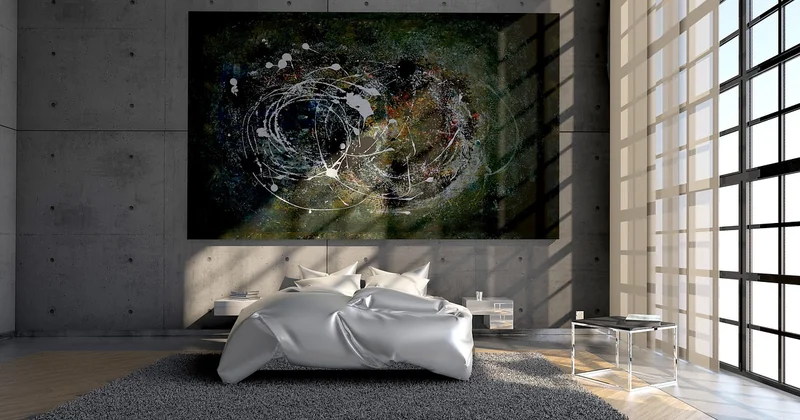
Visual wealth signals are cheap to fake and expensive to do well. A grand entry with a two-story foyer, oversized front door, and statement lighting reads as money to almost everyone. So do marble surfaces (even thin slabs over plywood), tall ceilings, and a kitchen island the size of a small car. None of these require a high-end build. You can install them in a mid-market house for a fraction of what real construction costs.
Actual quality shows up in the places nobody photographs. Door hardware that feels solid. Cabinet drawers that close themselves softly because the mechanism is good, not because it's new. Floor transitions without a visible threshold. Sound that doesn't travel between bedrooms. Plumbing that delivers hot water in four seconds instead of forty.
The three-second test
Stand in a doorway and close your eyes. Listen. In a genuinely high-end home, you hear almost nothing from the rest of the house. In a house that merely looks expensive, you hear the HVAC, the refrigerator, and someone's footsteps two rooms away. Acoustic isolation is the hardest thing to fake and the clearest signal of real construction quality.

I've watched buyers walk past a beautifully staged living room without a flicker and then spend twenty minutes in the mechanical room. That's not unusual among experienced purchasers. They know the finishes are replaceable and the bones are not.
Luxury home amenities that matter in 2026
The amenity list has rotated. Some things that were standard five years ago now read as dated, and a few things nobody asked for have become non-negotiable. Here's how the priorities have moved.
| Amenity | Status in 2026 | Why the shift |
|---|---|---|
| Home theater | Declining | Streaming and large-format panels made dedicated rooms redundant |
| Whole-house air and water filtration | Rising fast | Buyers now treat indoor air quality as a health feature |
| Wine cellar | Regional | Essential in some markets, a curiosity in others |
| Dedicated home office with acoustic treatment | Standard | Hybrid work made a real workspace a requirement, not a bonus |
| Indoor-outdoor transition (sliding glass walls) | Standard | Cheaper to build now, and it changes how a house feels |
| Spa-grade primary bath with steam | Rising | Wellness spending moved from gyms into the home |
| Smart lighting with circadian scheduling | Emerging | Sleep and mood research entered the design conversation |
| Backup battery and solar | Rising fast | Grid reliability concerns, plus lower system costs |
Notice what's missing from that table: pool, gym, and guest house. Those three appear on nearly every "luxury amenities" list you'll find, and they're all genuinely valuable, but they're also old news. They stopped being differentiators somewhere around 2015 and became expectations. An amenity only adds value while it's scarce.
What about unique custom features?
Here's where judgment matters. A bowling alley, a car elevator, a hidden speakeasy behind a bookcase: these get attention, and occasionally they sell a house to exactly one buyer who was looking for precisely that. More often they narrow the pool. I've seen a property sit for eleven months because the previous owner converted two guest bedrooms into a recording studio with a floating floor and acoustic foam on every wall. The next buyer had to budget for demolition before they could even imagine living there.
Custom features add value when they solve a problem the next owner will also have. A dog wash station near the garage entrance: almost always worth it. An elevator in a three-story house: often worth it, purely for aging in place. A grotto: you'd better love it, because you may be the last person who does.
How the criteria change from market to market
One thing the national "luxury living" conversation gets wrong: the definition is regional to a degree most buyers don't anticipate.
In coastal Southern California, the lot and the view carry the value. A modest 1960s house on a bluff can trade above a new 7,000-square-foot build three streets inland, because the land is the asset and the structure is a placeholder. In Texas, where land is plentiful and basements are rare due to soil conditions, the differentiators shift toward acreage, gated access, and outbuilding capacity. In dense Northeast markets, square footage is constrained by zoning, so finished lower levels and vertical living carry premium weight that would seem odd elsewhere.
None of this is intuitive if you're moving between markets. The features you paid for in one city may not be features at all in another. I've watched relocating buyers assume their basement wine room would be a selling point, only to discover the new market has no basements and no wine culture to match.
Does architectural pedigree really matter?
It matters more than the amenity lists suggest, and it's the most underrated factor in the entire discussion. A house designed by a recognized architect, or one with documented provenance (a notable original owner, a historic designation, land that was once part of an estate), carries a value premium that survives renovations and market downturns. It can't be replicated, which is exactly why it holds.
Compare that to a house whose value rests entirely on its finishes. Finishes are replaceable. Every buyer knows it. Pedigree is not replaceable, and buyers pay accordingly.
The mistake most people make when chasing luxury
Over-improving. It's the most common and most expensive error in this space, and I've made a version of it myself: spending on a feature I wanted rather than one the market rewarded, then discovering the money didn't come back at resale.
The math is unforgiving. Improvements priced above the ceiling of the surrounding neighborhood rarely recover their cost, and the higher you go, the worse the recovery gets. A $300,000 kitchen in a neighborhood where the top comparable sale is $1.2 million doesn't make the house worth $1.5 million. It makes it the most expensive house on the street, which is a hard place to sell from.
Luxury living, properly understood, is less about what you add and more about what you refuse to compromise on. Structure. Site. Systems. Provenance. Those four things hold value because they can't be installed later by whoever buys the house next. Everything else is decoration, and decoration is negotiable.
Which raises the question worth sitting with: if you stripped the finishes out of your ideal home, would what's left still be worth what you're paying for it? If the answer is yes, you're looking at a high-end property. If it's no, you're looking at a nice house with expensive taste layered on top.