Tablescaping for every occasion: what actually works on a real table
A friend texted me a photo of her dining table last month. Napkins fanned like little sails, three candles of decreasing height, a bowl of lemons she'd bought purely for the color. Her question: "Is this too much for a Tuesday?"
It wasn't. And that's the whole point.
Tablescaping has a reputation problem. Most people hear the word and picture a styled shoot: monogrammed linens, twelve-piece place settings, a florist's worth of eucalyptus spilling off the edge. In reality, the craft is about proportion, height, and restraint — three things you can apply to a paper napkin and a supermarket candle. I've styled tables for dinner parties, birthdays, and a lot of weeknights where the only guest was my own family. The version that survives contact with daily life is almost never the elaborate one.
Below you'll find the rules that hold up, the numbers behind them, and honest answers to the questions I get asked most.
Key takeaways
- The 3-5-7 rule is a proportion guide, not a law — it governs how many objects of each height you place in a centerpiece.
- An everyday table needs four things maximum: a runner or cloth, one vessel, one candle, one functional piece you actually use.
- Standard place settings use seven elements, but three of them are optional depending on the meal.
- Height is the single most common mistake. Anything above 30 cm blocks conversation across the table.
- Small tables, children, and pets are not obstacles — they just change the object count.
So what is a tablescape, exactly?
A tablescape is the deliberate arrangement of everything on a dining surface: linens, plates, glassware, flatware, a centerpiece, lighting. The word itself is a mashup of "table" and "landscape," and it entered common usage in the early 2000s through a television cook who treated table decoration as part of the recipe rather than an afterthought.

Here's the distinction that matters. A table setting is functional — fork left, knife right, glass above. A tablescape is that setting plus atmosphere: color, texture, height, light. Same objects, different intention.
Why the arrangement matters more than the objects
When I started paying attention to this, the thing that surprised me was how cheap the winning tables were. A linen runner I'd owned for years, repositioned lengthwise instead of crosswise. Candles moved from the middle to offset thirds. Total spend: zero. The table read as intentional instead of default.
Because a table communicates before anyone sits down. It tells guests whether they're expected or squeezed in between bills and a laptop charger.
What is the 3-5-7 rule in decorating?
The 3-5-7 rule is a styling guideline borrowed from interior design: group objects in odd numbers — typically three tall pieces, five medium, seven small — to build a centerpiece of graduated height and visual weight. Odd numbers work because the eye can't pair them into symmetry, so it keeps moving across the arrangement instead of settling.

Applied to a tablescape, it means your centerpiece isn't one big thing dropped in the middle. It's a cluster: three tall stems, five mid-height objects (small vessels, votives, stones), seven low fillers (sprigs, petals, berries).
How to apply it without buying anything
The version I use on my own table compresses the ratio rather than following it literally:
- Tall: three stems in a narrow vase, or three taper candles
- Medium: two small vessels — a stack of fruit, a pair of votives
- Low: a scattering of something organic, spread wider than the rest
That's a 3-2-many arrangement, which nobody will count. The rule gives you a starting shape. Once you've built it a few times, you stop counting and start sensing whether the cluster feels top-heavy or flat.
One caution: the 3-5-7 rule applies to the centerpiece, not to the entire table. I once made the mistake of applying it to the whole surface — seventeen objects across a table that seats four. It looked like a market stall, and nobody could reach the salt.
What are the 7 essentials to table setting?
The seven essentials are: a plate, a napkin, a fork, a knife, a spoon, a glass, and something in the center. That's the baseline for a seated meal. Everything beyond it — charger plates, butter plates, multiple glasses, place cards — is occasion-specific.
The sequencing most people get wrong isn't the count, it's the order of use. Flatware goes outside-in: the fork you'll use first sits furthest from the plate. Dessert spoons go above the plate or arrive later. Glasses sit top-right.
What to cut for a casual meal
For a weeknight dinner, I drop the spoon and often the second glass. Nobody has ever mentioned it. What guests do notice is whether there's a napkin within reach and whether the water glass got refilled.
Formal service exists so a stranger can serve you without asking questions. At home, you're not a stranger.
| Element | Weeknight | Dinner party | Holiday table |
|---|---|---|---|
| Charger plate | No | Optional | Yes |
| Napkin | Paper is fine | Cloth, folded once | Cloth, ring or fold |
| Glasses | One | Two | Two or three |
| Centerpiece height | Low, sinks below sightline | Mixed heights | Can rise if guests are seated apart |
| Candles | One | Two or three | Cluster, per 3-5-7 |
| Place cards | No | Only if assigning seats | Often helpful |
How do I decorate my dining table for everyday?
Keep it to a single horizontal line and a single vertical one. That's the whole method. A runner down the center gives you the horizontal; one vessel or candle gives you the vertical. Everything else on a daily table is clutter you'll move before dinner anyway.
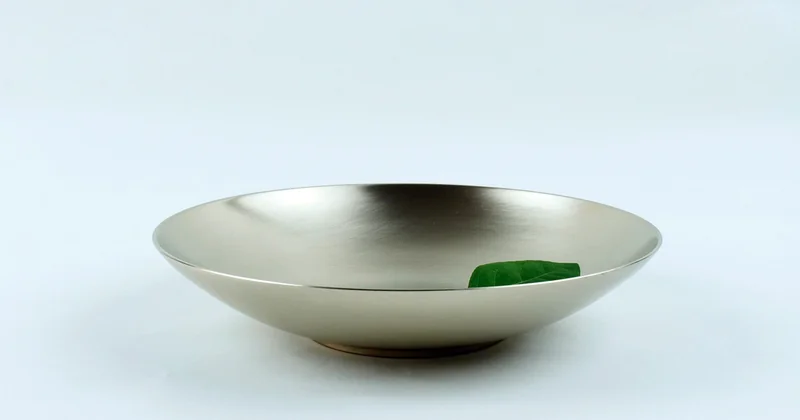
I tested this over about six weeks. The version that survived was: a linen runner, one small vase with whatever was in the garden, one candle, and a shallow bowl for keys and mail. Four objects. Setting the table took under a minute, which mattered more than I expected — a table you have to clear before you can use it stops being a table.
The height problem nobody warns you about
Anything taller than roughly 30 cm in the center of the table becomes a wall. You end up leaning sideways to talk to the person opposite. Taper candles on tall holders, big branches in a floor vase, stacked books — all of these look wonderful in a photograph and behave badly at a meal.
My rule: if I can't see the far edge of the table while seated, the centerpiece is too tall. I broke this rule at a birthday dinner and spent the evening watching two guests crane around a vase. Never again.
Small tables, kids, and pets
Narrow tables do better with tall, thin objects than wide ones — a single stem in a slim vase takes almost no footprint. For households with young children, skip candles entirely or place them on a tray that can be lifted off in one motion. Pets change the calculus too: nothing low, nothing edible, nothing that rolls.
None of this is a compromise. It's just the table you actually have.
What are some creative ideas for a tablescape?
The ideas that hold up are the ones built from what's already in the room. Rotate the palette, not the inventory.
- Seasonal produce as centerpiece. In autumn, a shallow bowl of pears; in summer, tomatoes on the vine. It gets eaten, which means it never becomes storage.
- Fabric instead of flowers. A length of raw linen, a folded scarf, even a favorite tea towel running the length of the table. Reusable, washable, zero waste.
- Mismatched glassware, matched by color. Four different shapes, all amber or all clear. Reads as collected rather than incomplete.
- Paper and pencil at each seat. Works for long dinners. Guests write something, you read them aloud at dessert.
- One thing from outside. A branch, a stone, a shell. It breaks the symmetry of manufactured objects and costs nothing.
How to plan a year of tables
Rather than styling for each event from scratch, I keep a rough calendar with a palette per season — muted greens and brass in winter, white and terracotta in summer — and let the occasion adjust the object count, not the color story. It means I'm never starting from zero, and the table has a throughline across the year instead of looking like eight unrelated parties.
The one thing I'd tell anyone building their first tablescape: pick a single height, a single color, and one texture. That's enough. The rest is a hobby you can grow into.
Do I need special storage for tablescaping pieces?
Not really. The failure mode isn't lack of storage, it's buying objects that only work once. If a piece can't appear in at least three different arrangements, it usually ends up in a box. I keep one shallow tray for candles and one for small vessels, and that's the entire system.
Is it worth renting a tablescape for a big event?
For a wedding or a large milestone, renting linens and glassware can make sense — you get a uniform look without owning forty pieces afterward. For anything under twenty guests, borrowing from your own kitchen and one friend's is usually faster and free.
Here's what I keep coming back to. A tablescape isn't a display. It's a set of decisions about how close people can sit, whether they can see each other, and whether the table feels like it was waiting for them. Get those three right and no one will notice the napkins.
Which means the lemons were fine. It was a Tuesday. The table looked ready.